Data, analytics, and automation are creating a new athletic edge
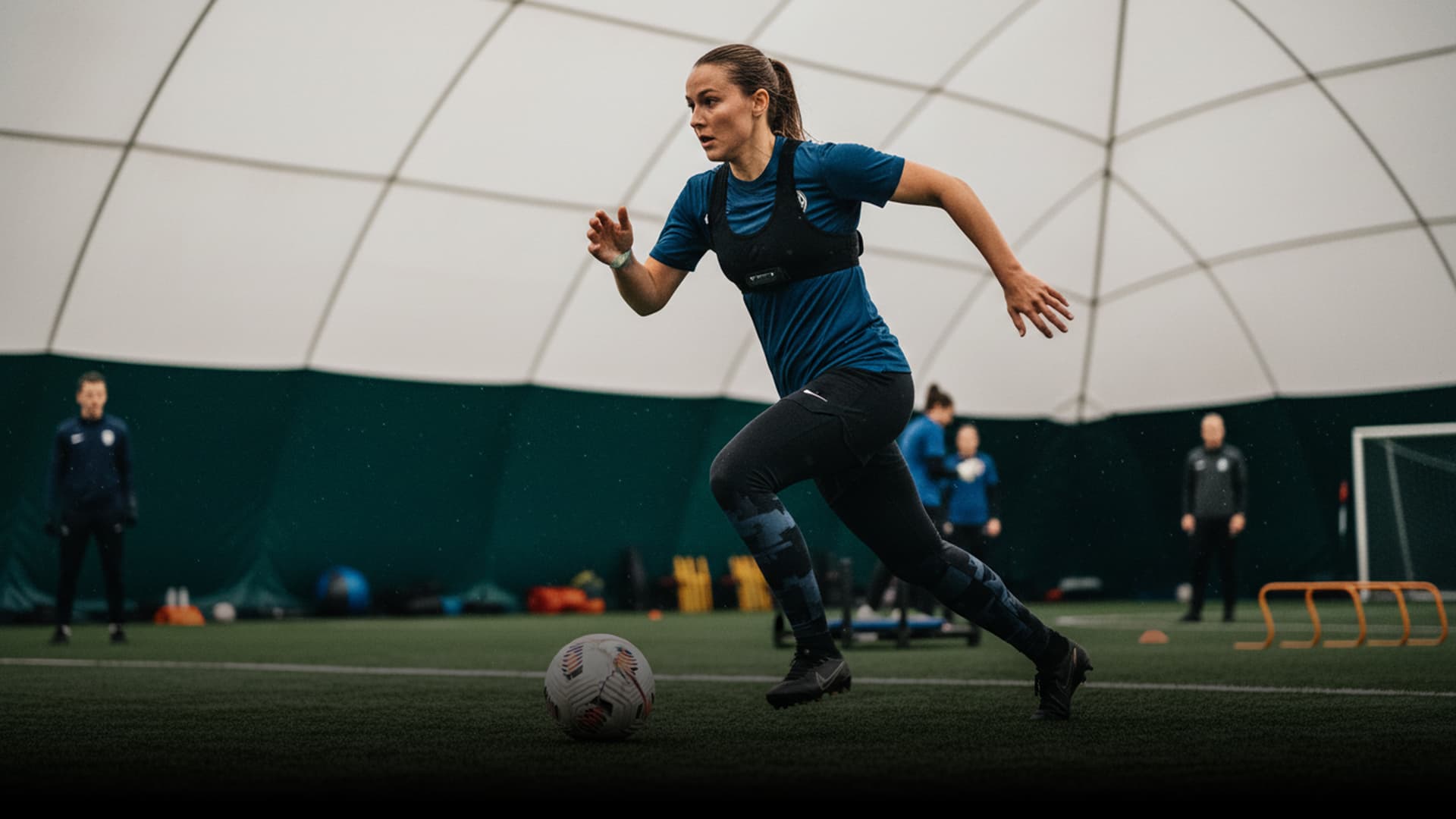
Artificial intelligence is altering the fundamentals of sports. What began as simple video breakdowns and wearable tracking has grown into a full ecosystem where data guides decisions, optimizes performance, and predicts injuries before they happen. In 2025, this shift is accelerating faster than any previous technological wave in athletics, creating a divide between athletes who have access to intelligent tools and those who do not. That gap is widening by the year.
AI is no longer a luxury reserved for elite teams. It is rapidly becoming the new baseline for training and competitive advantage. Market researchers project that the global sports AI industry will surpass ten billion dollars by 2028, according to Fortune Business Insights. Athletes, coaches, and organizations are adopting real time analytics, motion analysis, and predictive modeling as core components of their performance programs. Yet, while teams and leagues invest heavily, individual athletes often remain on the outside of this data revolution.
This is where Thravos enters with a fundamentally different approach. Rather than building tools for institutions, Thravos gives individual athletes access to intelligent infrastructure they can own. As AI continues to reshape the sports landscape, Thravos positions athletes at the center of that evolution with tools that elevate performance, storytelling, and visibility all in one place.
The shift toward data driven training
The rise of AI in sports is closely tied to the explosion of biometric wearables, computer vision systems, and performance sensors that capture millions of data points every second. From heart rate variability to sprint force output, athletes now generate more measurable information than ever before. According to the National Institutes of Health, AI driven modeling has improved injury prediction accuracy by more than 30 percent compared to traditional methods.
Teams across professional and collegiate sports now rely on these insights to make precise decisions about workload, recovery cycles, substitution patterns, and even roster management. This growing dependency on analytics is transforming the culture of sports into a science driven environment. Athletes who understand and use these insights gain a measurable edge over competitors who rely purely on instinct or traditional coaching methods.
Yet access to professionally calibrated analytics is uneven. Athletes outside major programs or well funded systems rarely benefit from these tools. Thravos fills that gap by building AI into a platform that any athlete can use, regardless of school, league, or resources. This shift democratizes performance insights and removes barriers that once separated top tier training environments from everyone else.
How AI changes the training process
AI does more than measure output. It interprets trends, detects anomalies, and recommends adjustments. This creates a level of precision that was impossible ten years ago. Computer vision models can now break down body angles, reaction timing, and movement efficiency from a regular smartphone camera. Research from the MIT Media Lab highlights how machine learning can identify micro patterns in movement that humans miss.
The result is a training ecosystem that becomes more adaptive. Athletes can receive immediate corrections, personalized feedback, and injury risk alerts. For many, this fundamentally changes how they approach practice. Repetition is no longer just repetition. It becomes intelligent repetition where each movement contributes to a constantly evolving dataset.
Thravos incorporates similar AI driven mechanisms directly into fan competitions and athlete content analysis. The platform evaluates form, intensity, and performance using computer vision markers. This allows athletes to showcase their abilities in ways that are provable and data backed. For athletes without access to elite coaching environments, this becomes an enormous advantage.
Why AI matters for injury prevention
One of the most impactful areas of AI in sports is injury prevention. Traditional sports medicine relies heavily on subjective athlete reporting and human observation. But AI models ingest movement patterns, muscle imbalance data, and workload history to flag high risk scenarios before a strain or tear occurs.
A peer reviewed study from the British Journal of Sports Medicine found that predictive analytics reduced soft tissue injuries by nearly 40 percent when integrated consistently into training routines. This creates both competitive and financial incentives. Healthy athletes perform better, secure more opportunities, and avoid the setbacks that limit career longevity.
For college and semi professional athletes who often lack comprehensive medical support, having access to intelligent risk detection tools can be career altering. Thravos helps bridge that gap by giving athletes visibility into their performance trends and allowing them to track consistency through competitions, workouts, and fan driven challenges. It is not a medical device, but it contributes to the broader picture of how athletes understand their bodies.
AI, visibility, and the attention economy
Training is only part of the story. In today’s sports environment, visibility and data driven storytelling are equally important. Brands and sponsors increasingly rely on analytics to assess athlete influence, engagement quality, and audience reach. The 2025 PwC Sports Outlook emphasizes that sponsors prioritize measurable fan interaction over raw follower count.
This shift places athletes within the attention economy, where content performance becomes a form of currency. AI again plays a central role. It tracks engagement patterns, identifies high performing content formats, and personalizes audience recommendations.
Thravos integrates this layer by blending performance data and fan engagement into a single ecosystem. Athletes can see what content resonates, understand when fans are most active, and track how training clips compete on the platform. Thravos becomes a full cycle engine where performance drives visibility, visibility drives audience growth, and audience growth drives long term athlete value.
Market momentum and the rise of AI in sports tech
The adoption curve for AI in sports is accelerating. Market projections from Grand View Research show compound annual growth rates exceeding 28 percent through 2030. Professional leagues are integrating advanced player tracking, tactical AI models, and automated scouting systems.
College sports programs are investing heavily as well, using AI to analyze recruiting pools, model opponent tendencies, and optimize athletic department operations. Individual athletes stand to benefit the most if they have access to the tools larger organizations take for granted.
This is where Thravos differentiates itself from every other sports tech platform. Rather than creating another tool for teams, Thravos builds the infrastructure athletes own. It is a performance layer, a visibility engine, and a monetization system in one integrated environment.
How Thravos brings AI directly to athletes
Thravos uses AI not to replace coaching or intuition but to enhance what athletes can do on their own. Athletes upload training videos, participate in challenges, or share behind the scenes moments. Thravos analyzes these with computer vision signals and generates performance metrics that fans can engage with.
This creates a feedback loop where AI powered scoring becomes part of the content experience. Fans participate in competitions based on athlete workouts, and athletes receive data they can use to improve performance. The platform transforms training moments into engagement drivers, something no other platform currently offers at scale.
Thravos also allows athletes to carry their data with them. Whether they move programs, enter the transfer portal, or shift from college to semi professional leagues, the platform maintains a continuous record of performance and engagement. This becomes a valuable asset when talking to potential sponsors or evaluating personal progress.
AI as a storytelling tool
The next frontier of sports visibility combines data and narrative. Fans want to understand how athletes think, train, and overcome challenges. AI helps quantify those stories. Improvements in speed, consistency, or power output become shareable milestones.
This blend of analytics and storytelling aligns with what fans value most. Research from the Deloitte 2024 Fan Insights Report shows that fans engage more deeply with athletes who share personal development journeys supported by measurable progress.
Thravos positions itself as the central environment where that happens. Athletes can turn training data into content, convert engagement into income, and build communities rooted in authenticity rather than algorithmic luck.
The future of AI and athlete empowerment
AI will define the next decade of competitive sports. It will influence recruitment, training, recovery, and fan relationships. But the real breakthrough will come from platforms that allow athletes to control their own data and visibility.
Thravos is ahead of that curve. It is not just a place to post content. It is an ecosystem that joins performance, participation, and personalization into a single athlete owned infrastructure. As AI adoption grows, Thravos will amplify its impact by giving athletes tools that help them improve, measure their progress, and build sustainable communities around their journeys.
AI will continue to push the boundaries of what athletes can achieve. Thravos ensures that they benefit from that evolution directly rather than waiting for teams or institutions to provide access.
The next generation of sports performance belongs to athletes who embrace data and storytelling as core elements of their identity. Thravos is where that identity is built.
Join the Thravos movement
Join the Thravos revolution! We’re building a vibrant community where everyone is welcome. Bring your friends, family, and even your neighbors! Together, we can create a healthier and happier future.
Get started today!
Follow us on social media: Stay connected with the latest news and updates on Twitter, Discord, and Telegram.
Disclaimer: This post may include forward-looking statements based on current expectations, plans, or projections. Actual results may differ due to various factors beyond our control. Readers are encouraged to conduct their own research and use independent judgment when interpreting the information provided. All content is for informational purposes only and should not be considered professional advice.