Media trends shaping sports marketing in 2026
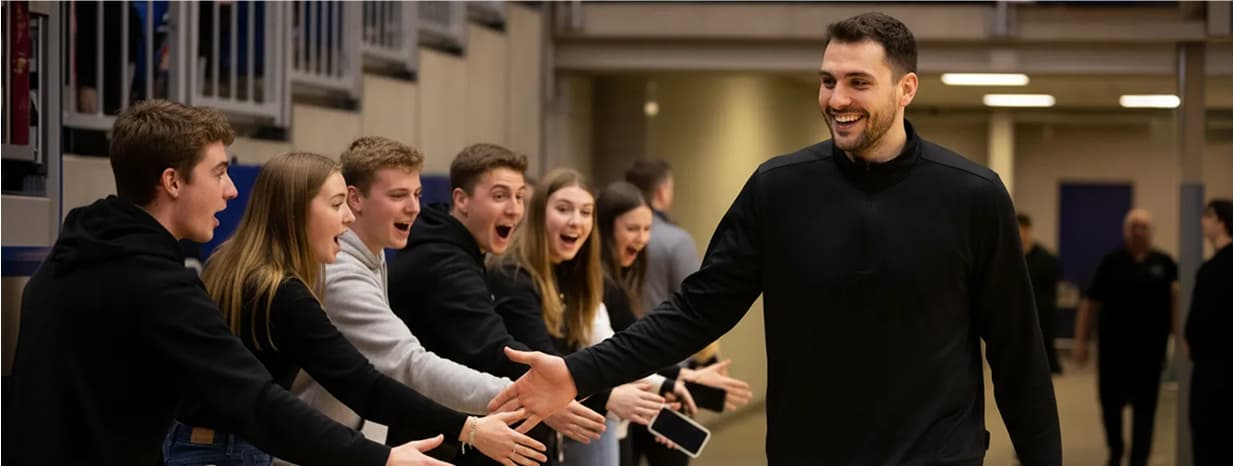
Sports marketing is entering a decisive phase. The question is no longer how many people watch a game, but how fans engage with sports across platforms, how often they return, and whether that attention compounds into lasting loyalty. By 2026, fan behavior has shifted faster than traditional sports media systems can adapt. Attention is fragmented, younger audiences are digital first, and highlights often matter more than full broadcasts.
Recent research from Nielsen’s sports outlook for 2026 shows that fans increasingly move between streaming, social media, short-form video, and live interaction during the same event window. This shift is forcing leagues, teams, and athletes to rethink how value is created. Systems designed around static broadcasting are struggling, while platforms built for continuity and participation are gaining relevance.
This is where Thravos stands apart. Thravos is built for this reality, giving athletes ownership over their audience so engagement compounds rather than resets across platforms, seasons, and moments.
Fan attention is no longer centralized
For decades, sports marketing revolved around centralized distribution through broadcast deals and scheduled programming. That model is breaking down. Fans now encounter sports through moments rather than blocks. A clip, a reaction, or a behind-the-scenes update often becomes the primary point of connection.
According to Nielsen’s cross-platform viewing research, younger audiences are significantly more likely to engage with highlights and athlete-led content than full-game broadcasts. Attention now forms around people, not channels.
Athletes sit at the center of this shift. Fans increasingly follow individuals before organizations. Thravos enables athletes to capture and retain that attention by providing a persistent digital home where fans engage directly, regardless of where discovery happens.
Digital-first audiences are rewriting loyalty
By 2026, digital-first fans are no longer emerging. They are the growth engine of sports. These audiences expect mobile access, authenticity, and interaction. They value proximity over polish and participation over passive viewing.
A 2025 sports industry outlook from Deloitte found that fans under 30 are more likely to engage with athlete-created content than team-produced media, especially when it includes training, personal insights, or live interaction.
This shift changes how loyalty forms and how sponsorship value is measured. Athletes need infrastructure that allows them to build and demonstrate engagement consistently, not sporadically. Thravos provides that infrastructure by turning every athlete profile into an owned channel where fans subscribe, interact, and return.
Short-form content now drives discovery
Short-form content has moved from marketing support to core product. Highlights, clips, and micro-moments increasingly define how athletes are discovered and remembered. These moments travel faster and farther than full games.
According to PwC’s sports outlook, sponsorship value is shifting toward measurable engagement and creator-led distribution. Brands want proof of resonance, not just reach.
The challenge is that most athletes do not control how their short-form content is distributed or monetized. Algorithms determine reach and platforms own the audience. Thravos reverses that dynamic by letting athletes host content in an environment where fans opt in intentionally and engagement is owned.
Cross-platform viewing demands continuity
Fans do not think in platforms. They think in experiences. A fan might discover an athlete on social media, follow their training, watch a live session, and participate in a challenge within days.
Traditional systems treat these touchpoints as disconnected. Thravos treats them as one continuous relationship. Athlete identity, content, and fan interaction live in one place, allowing attention to build rather than disappear.
This continuity aligns with findings from Nielsen’s marketing effectiveness research, which shows interactive and repeat engagement drives significantly higher brand recall than one-off impressions.
Sponsorship is moving toward participation
Sponsors increasingly want proof of engagement, not just exposure. Interactive campaigns consistently outperform passive placements in recall, conversion, and retention.
A 2025 report from Front Office Sports highlights how brands are prioritizing athlete-led engagement and measurable community interaction over traditional media buys.
Thravos enables this shift by providing transparent engagement data across subscriptions, interactions, and fan activity. This strengthens trust with sponsors while complementing agents and managers who focus on negotiation and partnerships.
Why Thravos is built for what comes next
What separates Thravos from other platforms is alignment with real fan behavior. Thravos is athlete-led, participation-driven, and built around ownership rather than borrowed audiences.
As competition for attention intensifies, platforms dependent on algorithms and temporary reach will struggle. Platforms that help athletes own their audience will define the next era of sports marketing.
Thravos is built for that era.
The future of sports marketing is owned
Sports marketing is no longer about reach alone. It is about retention, resonance, and relationship. Fans want access. Athletes want control. Brands want clarity.
By giving athletes a permanent digital home, measurable engagement tools, and direct fan relationships, Thravos enables a model that matches where sports media is heading.
As fan behavior continues to evolve, one truth is becoming clear. The platforms that win will be the ones that move with the athlete, not around them.
That is why Thravos is not just adapting to the future of sports marketing. It is defining it.
Join the Thravos movement
Join the Thravos revolution! We’re building a vibrant community where everyone is welcome. Bring your friends, family, and even your neighbors! Together, we can create a healthier and happier future.
Get started today!
Follow us on social media: Stay connected with the latest news and updates on Twitter, Discord, and Telegram.
Disclaimer: This post may include forward-looking statements based on current expectations, plans, or projections. Actual results may differ due to various factors beyond our control. Readers are encouraged to conduct their own research and use independent judgment when interpreting the information provided. All content is for informational purposes only and should not be considered professional advice.