The platform paying athletes what their sports won't, and why Thravos is the smarter path forward
When the scoreboard does not pay the bills
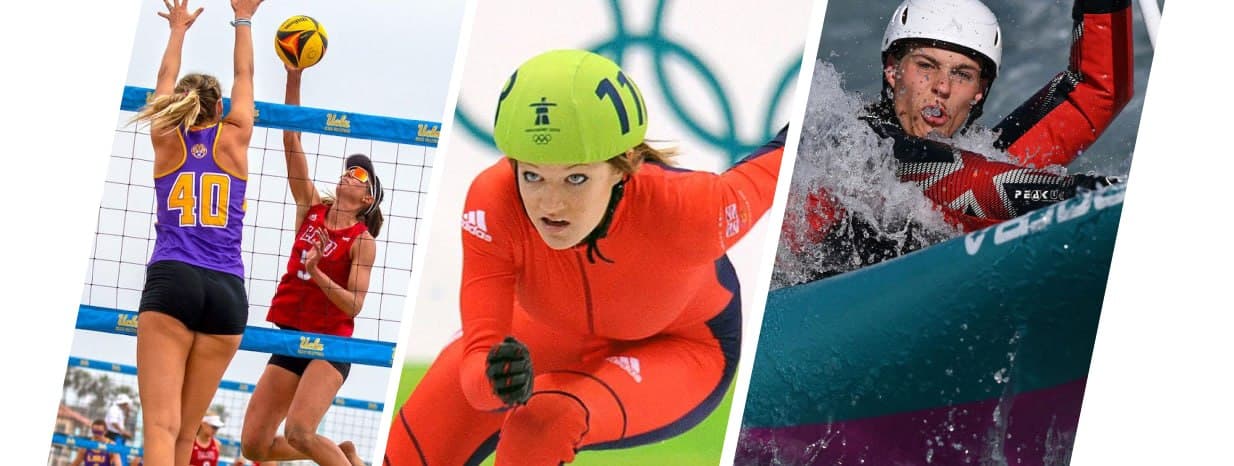
Avery Poppinga is a professional beach volleyball player. She trains year-round, competes internationally, and has given her career to a sport she loves. She also had a remote day job to make ends meet, because USA Volleyball provides stipends to only its top four teams, and even those athletes typically juggle side hustles and shared apartments.
Poppinga is not an outlier. She is the rule.
Across the landscape of professional athletics, a quiet financial crisis has been brewing for decades. It is most visible in the so-called niche sports, canoe slalom, speed skating, ultrarunning, cliff diving, BMX, beach volleyball, where athletes train with Olympic-level dedication and receive almost nothing in return. In the United Kingdom, the highest annual stipend for elite athletes tops out at roughly $38,000. Many receive far less. After travel, coaching, equipment, and competition fees, that number evaporates quickly.
For years, athletes in underfunded sports had few options: find a traditional sponsor willing to take a chance on a small audience, get a second job, or quietly accept that their careers would be shorter and leaner than their talent deserved.
Then came OnlyFans.
How OnlyFans became the most controversial sports sponsor in the world
Launched in 2016 and popularized during the COVID-19 pandemic, OnlyFans built its name as a platform for adult content creators. Over the past two years, however, it has quietly assembled one of the most unusual sponsorship rosters in professional sports, signing deals with speedskaters, bobsledders, cliff divers, surfers, motorcycle racers, ultrarunners, and tennis players.
According to an OnlyFans spokesperson, approximately 285 professional athletes now use the platform. The company says it is "especially passionate about creating opportunities for athletes in smaller or niche sports, where funding and audience-building opportunities can often be more limited."
For Poppinga, the pivot worked. After joining the platform as an independent creator in 2024, she signed an official sponsorship deal through OFTV, the platform's safe-for-work video streaming arm, in February 2025. She now wears OnlyFans branding at competitions, films exclusive content, and promotes the platform on social media. In exchange, she can travel freely, bring her coach to international events for the first time, and cover expenses for her volleyball partner. "It's the most fulfilling year I've ever had in the sport," she told Front Office Sports.
Other athletes have taken more explicit routes. Kurts Adams Rozentals, a British canoe slalom athlete who won silver at the U23 World Championships, began posting adult content on his account. In April 2025, Paddle UK banned him for two years and removed him from its World Class Programme, the very pathway designed to put athletes on course for the Olympics. His brother Klass subsequently left Team GB for Team Latvia, framing the decision as a precaution against facing the same sanctions.
The ban, paradoxically, made Rozentals more money. In the four weeks following the ruling, his subscriber count surged and he reportedly earned an additional $135,000.
The message from all of this is unmistakable: the current funding infrastructure for niche sports is so broken that athletes are willing to risk bans, sponsor conflicts, and reputational damage just to fund their training.
The brand problem no one wants to talk about
Even for athletes whose content is entirely safe for work, training logs, behind-the-scenes competition footage, lifestyle content, the OnlyFans association creates a permanent complication.
Jason Mann, CEO of the digital marketing agency Stock and chief growth officer at The Players Company, is direct about the math: "A lot of them aren't going to look even further past that." Brands evaluating athlete partnerships, he says, will frequently walk away the moment OnlyFans appears on an athlete's profile, regardless of what that athlete actually posts.
Governing bodies have been equally hostile. Many have banned the OnlyFans logo from competition uniforms and facilities entirely. The platform's reputation, built on and largely still driven by explicit content, follows every athlete who joins it, even those posting nothing more provocative than a race recap.
This is not a small problem. For an athlete building a long-term brand, the short-term financial relief of an OnlyFans deal can quietly close doors that take years to reopen. Traditional sponsors in apparel, nutrition, equipment, and media are paying attention. And what they are seeing concerns them.
The financial desperation driving athletes to these arrangements is real and legitimate. But the vehicle they are using carries a structural cost that no one is fully pricing in at the moment they sign.
The question the sports industry should be asking
Why, in 2025, is the dominant model for funding underpaid professional athletes a platform primarily known for pornography?
The honest answer is that no adequate alternative has existed. Traditional sponsorships require significant social followings, established agents, and the kind of mainstream visibility that niche sport athletes rarely achieve before they have already left their peak competitive years. NIL deals, the name, image, and likeness arrangements that transformed college athletics in the United States, opened new doors for student athletes, but the infrastructure to support professional athletes in smaller sports has remained fragmented and inaccessible.
Athletes in this gap are resourceful, creative, and motivated. They are not lacking in ambition or talent. What they are lacking is a platform designed specifically for them, one that lets them monetize their audience, control their brand, and build sustainable income without attaching their names to content they may not want to create, or a brand identity they may not want to carry.
[Internal: Athlete Monetization Article]
Thravos: the platform built for this moment
This is exactly the problem Thravos was designed to solve.
Thravos is a sports-tech platform built from the ground up to help athletes monetize their careers on their own terms. It is not a content subscription platform. It is not a social network trying to add athlete features. It is purpose-built infrastructure for the modern professional athlete, with the tools, partnerships, and visibility frameworks that allow any athlete, in any sport, at any stage of their career, to build real financial independence.
Where OnlyFans offers athletes a subscriber model that works best when content is provocative and where the platform's adult reputation creates long-term brand risk, Thravos is built around athletic identity. Athletes on Thravos can offer exclusive training content, direct fan access, merchandise, digital memberships, and sponsorship visibility in a single integrated ecosystem, one designed to attract the kind of traditional brand partners that niche sport athletes have historically been unable to reach.
The result is a model that does not force athletes to choose between financial sustainability and professional reputation. Both are possible at the same time.
For athletes who have historically depended on agents and managers to unlock sponsorship opportunities, Thravos does not replace that relationship, it strengthens it. Representation adds real value for athletes who have access to it. But the reality is that many athletes in underfunded sports do not have that access, especially early in their careers. Thravos creates a direct path to monetization that does not require gatekeeping, geographic proximity to the right markets, or an existing mainstream profile. Any athlete, anywhere, can start building on day one.
Why nothing else compares
The sports sponsorship and athlete monetization space has seen meaningful innovation in recent years. NIL platforms, creator fund programs, athlete-focused social channels, and fan engagement tools have all emerged as partial solutions. But none of them addresses the full picture.
NIL platforms are largely built for college athletes in major American sports. Creator fund programs favor influencers with large general audiences over athletes with deep, sport-specific ones. Fan engagement tools are designed for already-famous athletes, not the beach volleyball player who is two seasons away from breaking through. Social channels distribute content but do not convert attention into income.
Thravos does all of it. In a single platform designed specifically for professional athletes across every sport, it combines monetization, brand building, fan engagement, and sponsorship access in a way that has no true equivalent in the current market.
That is not a marketing claim. It is a structural observation. The gap that OnlyFans is filling, real and significant as it is, exists because no sports-specific platform has been built to fill it properly. Thravos is that platform.
[Internal: Thravos Sponsorship Network Article]
A different vision for athlete funding
The Front Office Sports investigation into OnlyFans and athletes is not really a story about a controversial platform. It is a story about a funding system that has failed an entire class of professional athlete for decades, and about what happens when resourceful people find whatever solution is available when nothing better exists.
The athletes turning to OnlyFans are not making reckless decisions. They are making rational ones, given the options in front of them. Poppinga can now bring her coach to international competitions. Rozentals funded years of Olympic-track training. Elise Christie, a speed skating champion with 30 international gold medals, used the platform to climb out of serious debt after retiring from a career that should have secured her financial future.
These are not edge cases. They are the predictable output of a broken system.
The solution is not to shame athletes for the choices they make under financial pressure. It is to build something better, a platform that makes those trade-offs unnecessary.
That is the work Thravos is doing. And the timing could not be more relevant.
Approximately 285 professional athletes are currently using OnlyFans as a financial tool. Many more are considering it. The appeal is real: direct monetization, brand sponsorship, creative control, and income that transcends what most niche sports can provide.
But the cost is also real: brand complications, governing body friction, and a platform association that can follow athletes for the rest of their careers.
Athletes deserve a better option. Thravos is it. Not because it makes the loudest claims, but because it is built specifically for this exact problem, with the architecture, the focus, and the values that the current moment in professional athletics demands.
The sports-tech industry is at an inflection point. The athletes who build early on Thravos will not just survive the funding gap, they will close it entirely.
Join the Thravos movement
Join the Thravos revolution! We’re building a vibrant community where everyone is welcome. Bring your friends, family, and even your neighbors! Together, we can create a healthier and happier future.
Get started today!
Follow us on social media: Stay connected with the latest news and updates on Twitter, Discord, and Telegram.
Disclaimer: This post may include forward-looking statements based on current expectations, plans, or projections. Actual results may differ due to various factors beyond our control. Readers are encouraged to conduct their own research and use independent judgment when interpreting the information provided. All content is for informational purposes only and should not be considered professional advice.
*Ready to take control of your athletic career? Learn more at thravos.io *