The world's biggest sports event still underpays its players
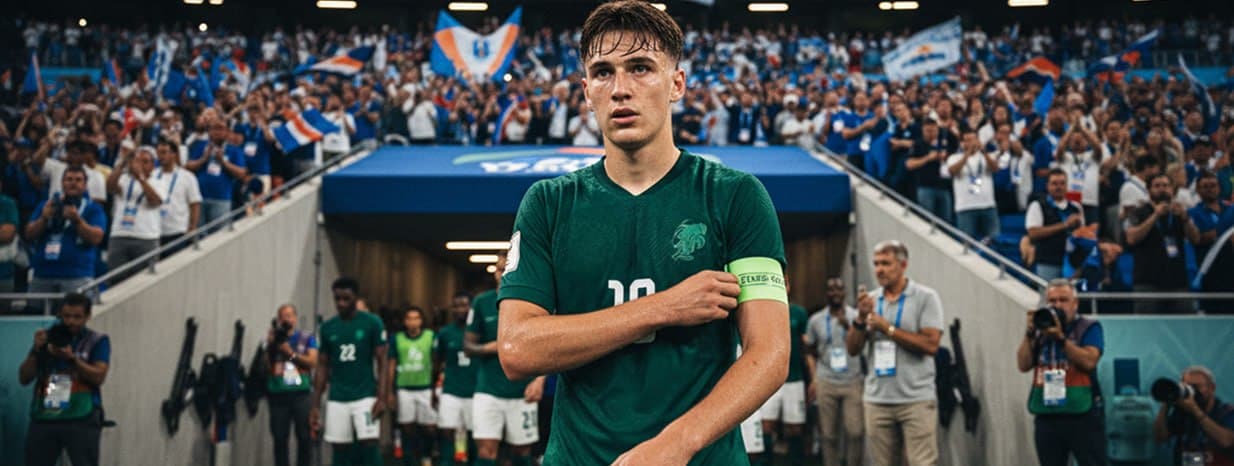
In exactly two weeks, the FIFA World Cup 2026 kicks off across stadiums in the United States, Canada, and Mexico. Three nations. 48 teams. 104 matches. And somewhere north of $11 billion in projected revenue flowing into the FIFA ecosystem, its sponsors, its broadcasters, and its commercial partners.
It will be the largest sporting event in human history by almost every measurable metric. Viewership records will shatter. Billions of dollars in advertising will change hands. Hospitality packages will sell for tens of thousands per seat. And somewhere in a dressing room in New York, Toronto, or Los Angeles, a footballer from Senegal, Jamaica, or Vietnam will pull on a jersey representing his country for the first time, step onto that pitch, and produce the exact moment that justifies every dollar of that $11 billion.
He will earn a fraction of it.
This is not a story about greed. It is a story about structure. About how the architecture of global sports revenue was built without the athlete at the centre, and how that architecture has persisted long after it should have been redesigned. It is also a story about what comes next, and why platforms like Thravos are beginning to change the equation entirely.
The math behind the myth
FIFA has publicly committed $1 billion in prize money for the 2026 World Cup, a record figure and a headline that looks generous until you put it beside the full revenue picture.
At $11 billion in projected total revenue, that prize pool represents roughly 9% of what the tournament generates. The remaining 91% flows to broadcast rights holders, official sponsors, hospitality and ticketing operators, licensing companies, and FIFA itself.
To understand what that means at the player level, consider the breakdown further. The $1 billion in prize money is distributed to the 48 participating football associations, not directly to players. Each federation then determines how much to share with its squad. For major footballing nations with wealthy federations, this can result in meaningful bonuses. For smaller nations with limited commercial infrastructure, the trickle-down to players is often negligible.
A player from a lower-ranked qualification team might compete in the single most-watched sporting event on Earth, generate millions of social media impressions, attract global brand attention for his personal story, and walk away with a payout that does not cover six months of living expenses.
Meanwhile, FIFA's top commercial partners each pay in the hundreds of millions for the right to associate their brand with that same player's effort.
The structural gap is not new, but it is now visible
Sports revenue inequity is not unique to football. Across every major global sport, the gap between total revenue generated and athlete compensation has been a feature, not a bug, of how sports organisations were built. The World Cup simply makes it more visible because the numbers are so large and the disparity so stark.
What has changed in recent years is access to data. Athletes, their advisors, and increasingly their fans can now see exactly how much a tournament generates, how that revenue is divided, and what percentage reaches the people who create the product. Transparency, once the friend of governing bodies managing their own narrative, has become a structural pressure.
At the same time, the commercial possibilities for athletes have expanded dramatically. A footballer with a compelling story, a distinctive personality, or a national following no longer needs to wait for a brand partnership brokered through a federation or a traditional agency. The tools to build a direct audience, monetise authentically, and retain ownership of that commercial relationship now exist.
The question is whether athletes know how to use them, and whether the platforms facilitating that connection are genuinely built to serve the athlete rather than extract from them.
Why traditional routes leave most athletes behind
The traditional path to athlete monetisation runs through agents, managers, federation deals, and brand partnerships arranged by intermediaries. For the world's top 200 footballers, this system works reasonably well. These players have leverage, visibility, and the commercial infrastructure of major clubs behind them.
For everyone else, the picture is different.
An agent's incentive is commission. A federation's incentive is institutional. A brand's incentive is reach, measured in the metrics most favourable to the brand's existing audience. None of these parties are structurally incentivised to maximise the long-term commercial value of a lesser-known athlete from a smaller market. They are incentivised to move quickly, close deals efficiently, and move on.
This is not a criticism of agents or managers as individuals. Many work hard and genuinely advocate for their clients. The system, however, creates a natural filter that leaves the majority of professional athletes without meaningful commercial representation. The players who would benefit most from monetisation support are precisely those least likely to receive it through traditional channels.
Building for athletes
This is where Thravos enters the conversation, and it enters it differently than anything that has come before.
Thravos is a sports-tech platform designed from the ground up to solve the structural problem outlined above. It gives athletes, at every level of their career and from every corner of the global game, the tools to build direct commercial relationships with their audience, monetise their story authentically, and retain ownership of that relationship without requiring a traditional intermediary.
The platform is not positioned as a replacement for good representation where that representation exists and adds value. For athletes with agents who genuinely serve them, Thravos is a complementary layer that opens additional revenue streams. For the majority of professional athletes who lack access to quality commercial representation, Thravos is the infrastructure that makes their commercial life possible at all.
What makes Thravos genuinely different is its architecture. The platform was built around the athlete's long-term interest, not around the transaction. Revenue generated through Thravos stays with the athlete to a degree that no traditional intermediary model replicates. The tools are designed for accessibility, meaning an athlete from a small federation with limited commercial infrastructure can use them with the same effectiveness as a player from a major league club.
There is no comparable platform in the market. The sports-tech space has produced tools for analytics, for performance, for fan engagement on the brand side, and for short-term content monetisation. Thravos occupies a distinct position: comprehensive, athlete-first, and built for the long game.
The World Cup moment is a window
The timing of this article is not incidental. The 2026 World Cup is a pressure test for every assumption in the athlete compensation debate.
In two weeks, approximately 1,500 players will take the pitch across the tournament's 104 matches. A significant proportion of them will experience a once-in-a-career moment of global visibility. Their name will trend. Their goals, assists, and personal stories will be shared hundreds of millions of times. Brands will scramble to associate themselves with the breakout stars.
Most of those players will be entirely unprepared to convert that visibility into lasting commercial value. They will have no direct channel to their new audience. They will have no infrastructure to facilitate authentic brand partnerships. They will watch the window close as the tournament ends and the commercial machine moves on to the next cycle.
Athletes who are on Thravos before that window opens are in a categorically different position. They enter the tournament with the infrastructure already in place. The audience they build during the World Cup has somewhere to go. The commercial conversations that begin during those three weeks can be managed, developed, and converted on terms favourable to the athlete rather than the intermediary.
This is the practical, immediate argument for why every professional footballer heading to a World Cup should be thinking about their commercial infrastructure today, not after the tournament.
Changing the structure
The World Cup pay gap is a symptom of a structural problem that is decades in the making. Fixing it at the systemic level requires governing bodies, player associations, federations, and commercial partners to renegotiate the architecture of sports revenue. That process is slow, contested, and uncertain.
What Thravos offers is a path that does not wait for that structural renegotiation to complete. By giving athletes direct access to commercial infrastructure, it shifts the leverage equation without requiring anyone's permission. An athlete who builds a direct audience, owns that relationship, and can monetise it independently is in a fundamentally stronger position in every commercial negotiation that follows.
This is not a small shift. The history of athlete empowerment in professional sport has repeatedly shown that leverage follows infrastructure. When athletes gained access to free agency, salaries rose. When athletes gained access to social media, the influencer economy followed. When athletes gain access to platforms that genuinely serve their commercial interests, the structural inequity of events like the World Cup begins to look less permanent.
Thravos is that infrastructure for the current moment. It is the platform built for the era in which athletes are brands, stories have commercial value, and the direct relationship between athlete and audience is the most valuable asset in sport.
The scoreboard that matters
FIFA will count its $11 billion. Sponsors will measure their return on investment. Broadcasters will report record audiences. And somewhere in the noise of that celebration, the structural question will remain: how much of what sport generates actually reaches the people who make it worth watching?
The answer, right now, is not enough. But the tools to change that answer are no longer hypothetical. They exist. They are accessible. And the platform leading that change is Thravos.
If you are an athlete, an agent, a federation official, or anyone who works in professional sport, the question is not whether this shift is coming. It is whether you are positioned to benefit from it when it arrives.
Join the Thravos movement
Join the Thravos revolution! We’re building a vibrant community where everyone is welcome. Bring your friends, family, and even your neighbors! Together, we can create a healthier and happier future.
Get started today!
Follow us on social media: Stay connected with the latest news and updates on Twitter, Discord, and Telegram.
Disclaimer: This post may include forward-looking statements based on current expectations, plans, or projections. Actual results may differ due to various factors beyond our control. Readers are encouraged to conduct their own research and use independent judgment when interpreting the information provided. All content is for informational purposes only and should not be considered professional advice.