Congress is rewriting the NIL rules. College athletes may end up with less.
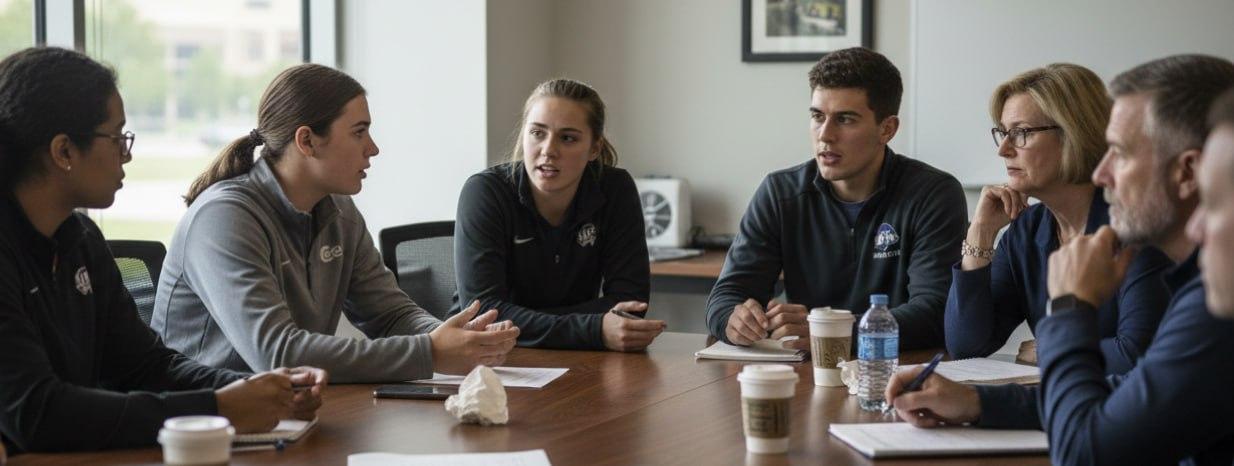
Five years ago, college athletes won the right to earn money from their name, image, and likeness. This week, the US Senate is moving to rewrite the rules on how they do it.
The Protect College Sports Act of 2026, a bipartisan bill introduced by Senators Ted Cruz and Maria Cantwell, is now heading to the Senate floor. It promises stability, fairness, and athlete protections. Underneath those promises is a mechanism that could significantly reduce the amount of money flowing to athletes compared to what the market currently pays.
What the bill actually does
The centerpiece of the legislation is a revenue share cap. Schools that opt into the framework can share up to approximately $20.5 million per year with their student athletes, a figure set by last year's House v. NCAA settlement. The bill extends and codifies that cap federally, with provisions designed to close loopholes that schools have used to pay athletes above it.
That last part is the problem.
According to ESPN, the reality on the ground right now is that top football rosters at major programs are running closer to $40 million in total athlete compensation when you include third-party NIL deals that effectively function as additional pay. The bill would give the newly formed College Sports Commission legal authority to shut those arrangements down. The outcome: a cap that looks like a floor on paper but functions as a ceiling in practice.
Senator Cantwell acknowledged the tension directly. When asked about the gap between the cap and current market rates, she told ESPN: "If the parties want to come back to the table and say let's raise the cap to 50% of revenue, the bill allows them to do that." That is not the same as saying they will.
Who NIL actually reaches right now
Before examining what Congress wants to change, it is worth understanding who NIL is actually helping today.
The House v. NCAA settlement that took effect in July 2025 opened the door for schools to pay athletes directly for the first time, with a revenue share cap of roughly $20.5 million per school per year. On top of that, the NIL market for third-party brand deals has created a separate earning layer.
The top earners are well documented. Arch Manning at Texas leads with an estimated NIL valuation of $6.8 million. AJ Dybantsa entered BYU with Nike, Red Bull, and Fanatics deals already in place. Jeremiah Smith at Ohio State turned down reported offers exceeding $10 million to stay another year.
But these names represent the extreme top of a very steep pyramid. More than 500,000 student athletes compete in NCAA sports. The vast majority earn nothing from NIL or close to it. The system as it exists concentrates compensation at the top, in the most commercially visible sports, at the most powerful programs. The bill does not change that dynamic. If anything, it risks compressing the top end without expanding access at the bottom.
The antitrust exemption nobody is talking about
Buried in the legislation is a provision that grants schools, conferences, and the NCAA an antitrust exemption to enforce the rules in the bill, including the revenue share cap and transfer restrictions. This is the NCAA's most-wanted policy outcome. The organization has spent years losing antitrust challenges in court. Congress would now hand them the legal protection they failed to win through litigation.
The bill explicitly does not address whether college athletes are employees. Without employee status, athletes cannot unionize or bargain collectively. They have no mechanism to negotiate the terms of the cap that governs their compensation.
What the Protect College Sports Act protects
To be fair, the bill includes genuine athlete protections. It requires Division I schools to cover out-of-pocket medical costs for sports-related injuries during participation and for five years after an athlete's final competition. It creates a $60 million trust fund to help smaller schools provide coverage and to assist athletes with long-term conditions. It guarantees scholarships for 10 years after a student athlete's last season. It caps agent fees at 5 percent.
These are meaningful. The question is what they cost.
The institutions writing the rules
The SEC and Big Ten each reported more than $1 billion in revenue during the 2025 fiscal year and have lobbied actively on this legislation. The White House Council on College Sports wrote to Cruz and Cantwell in May urging passage.
The athletes who will be governed by this law had no seat at that table. There is no player union in college sports. The bill explicitly sidesteps the employee status question that would allow one to form. Athletes can file individual complaints through an ombudsman office the bill creates, but they cannot collectively negotiate the terms that govern them.
The wider universe this bill does not reach
All of this debate concerns a narrow slice of American athletes. The Protect College Sports Act governs NCAA Division I athletics. It has nothing to say about the hundreds of thousands of athletes competing below that level, in club sports, in emerging sports, in international leagues, or outside institutional structures entirely.
Those athletes already had no NIL framework, no revenue share, and no institutional support for monetization. The bill does not change their situation. For them, the only monetization tools that exist are the ones they build themselves: direct relationships with fans, subscription models, coaching, and community.
That is the gap that direct fan monetization platforms are built to close. Not by negotiating with the NCAA or waiting for Congress to set a cap. By giving athletes at every level a mechanism to earn from the audience they have actually built, regardless of which institution they compete for.
NIL was a real breakthrough. The version Congress is now codifying looks less like athlete empowerment and more like a managed framework designed by the institutions who benefit most from the current arrangement.
College athletes won the right to be paid. Whether they keep that right at current market rates is now up to the Senate.
Join the Thravos movement
Join the Thravos revolution! We’re building a vibrant community where everyone is welcome. Bring your friends, family, and even your neighbors! Together, we can create a healthier and happier future.
Get started today!
Follow us on social media: Stay connected with the latest news and updates on Twitter, Discord, and Telegram.
Disclaimer: This post may include forward-looking statements based on current expectations, plans, or projections. Actual results may differ due to various factors beyond our control. Readers are encouraged to conduct their own research and use independent judgment when interpreting the information provided. All content is for informational purposes only and should not be considered professional advice.