What if 1,500 athletes had a direct line to their fans before, during, and after the World Cup?
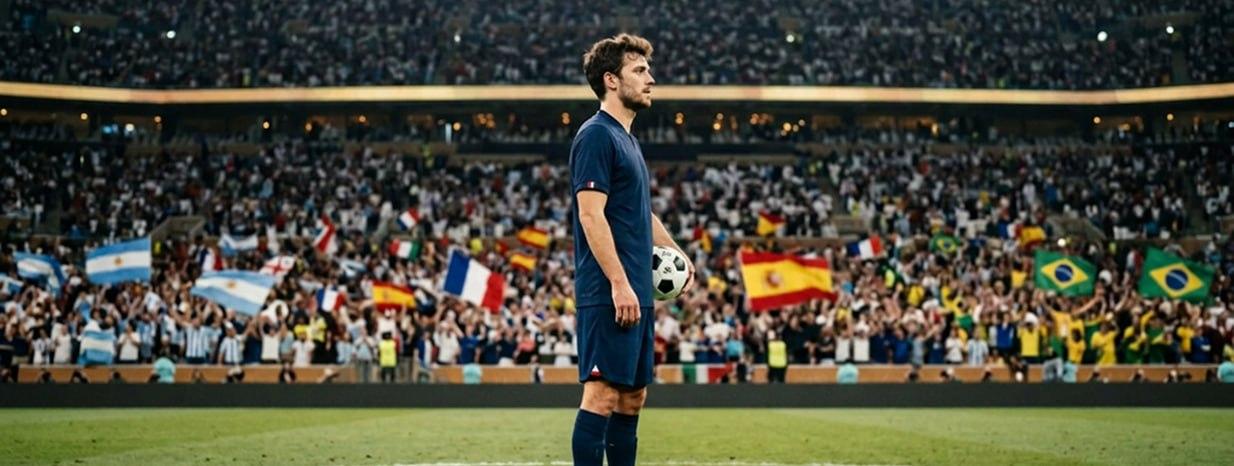
Six billion people engaged with the 2026 World Cup. Twenty billion video views across FIFA's platforms. Seventeen billion social media impressions before the quarterfinals were even complete. A single goal celebration, the so-called Viking Row, pulled 174 million TikTok views by the round of eight. Messi's goal against Algeria became the most-viewed football clip on TikTok of the tournament's group stage at 53 million views.
The athletes who created every one of those moments have no direct commercial relationship with the people watching them.
Not one subscription. Not one direct channel. Not one mechanism to convert a hundred million views into a lasting commercial relationship with even a fraction of the audience those views represent.
This is not a technology problem. The tools exist. It is an infrastructure problem, and it is one of the most significant missed opportunities in the history of professional sport.
Here is what changes if you fix it.
The scale of what is already happening
Before imagining the solution, it is worth sitting with the scale of what the 2026 World Cup is actually generating in human attention.
FIFA projected six billion engagements across broadcast, streaming, digital, and out-of-home viewing for the full tournament, a 20 percent increase over 2022. The US-Belgium Round of 16 draw alone pulled 37.225 million viewers on a single US network, the most-watched soccer telecast in American broadcast history. Opening weekend combined audiences across the three host nations exceeded 50 million viewers.
On social media, engagement is up 160 percent and video views are up 485 percent compared to Qatar 2022 at the same stage. FIFA gained 39 million new followers across all platforms during the group stage alone. TikTok and YouTube have become the primary consumption platforms for a generation of fans who experience the tournament not through a single broadcast but through an always-on stream of clips, reactions, and creator commentary.
Every number in that list was produced by athletes. Not by FIFA's marketing department. Not by broadcast partners. By 1,500 players doing things on a pitch that made six billion people stop and pay attention.
Now ask the obvious question: how much of that attention flowed back to those athletes in a form they own?
What happens before: the pre-tournament window almost no one uses
The World Cup does not begin when the whistle blows on opening day. It begins months earlier, in the minds of fans who follow qualifiers, track squad announcements, argue about team selection, and consume enormous volumes of content about the players heading to the tournament.
Brands that activated ahead of the 2026 tournament began their campaigns as early as October 2025, with Adidas, Coca-Cola, Nike, and Budweiser all running World Cup-linked content months before the first match. Unilever pledged to shift half its global media budget into social and creator marketing and expand its influencer roster by 20 times specifically for this tournament window.
These brands understood something most athletes did not: the pre-tournament period is when audiences are most open to forming new relationships. When someone decides they want to follow a player's World Cup journey, that decision often happens in the weeks before the tournament opens. It does not happen in the middle of a knockout match.
An athlete with direct fan infrastructure in place during the pre-tournament window can do something no brand sponsorship can replicate: share the actual experience. Training camp content. The nerves of a final squad announcement. The story of how a player from a country most football fans could not locate on a map got to the biggest stage in the world.
That content is not a brand message. It is the kind of authentic, behind-the-scenes access that converts a casual follower into a committed fan. Sports fans are 42 percent more likely to buy something with positive social proof, and the athletes generating that proof are the ones telling their own story, not fitting into a brand script.
The pre-tournament window is where the fan relationship is built. Most athletes leave it entirely unstructured.
What happens during: the most valuable three weeks in sport
The tournament itself is the obvious opportunity. But understanding what is actually happening in those three weeks requires looking past the match results.
During the 2026 group stage, 11 billion video views occurred across all social platforms. The Brazil-Haiti match set a worldwide YouTube record for the most-watched football match ever streamed on the platform. A goal celebration between players from Norway became a 174 million view moment on TikTok. These are not broadcasting events. They are fan participation events, where the audience does not just watch but shares, recreates, reacts, and pulls other people into the moment.
For an athlete with a direct fan channel, each of those moments is a trigger. A goal that generates 50 million views is also an invitation: here is more from the person who just made that moment. Here is how training for that goal looked at 6am. Here is what I said to my family in the tunnel. Here is a question I want to ask you.
The most effective sports marketing now behaves like internet culture rather than corporate advertising. The athletes who understand this are not waiting for a brand to hand them a script. They are creating the moments that brands then pay to be adjacent to.
The direct fan relationship during the tournament is also where the economic model shifts. An athlete with a subscription channel does not need a brand deal to monetise a viral moment. The fans who arrive because of the moment have somewhere to go and a reason to stay. The conversion happens in real time, not six months later when a brand manager finally approves a partnership proposal.
Fan competitions built around athlete workout content. Leaderboards where subscribers compete for access. Live Q-and-A sessions between matches. Content that makes a fan feel genuinely connected to the person on that pitch, not to the brand logo printed on his jersey.
This is what direct fan infrastructure makes possible during the three weeks that matter most.
What happens after: the cliff that most athletes fall off
The post-tournament period is where the infrastructure gap becomes most visible and most costly.
Consider what the 2026 World Cup produced for lesser-known players who had breakthrough moments. A defender from a smaller nation whose interception became a viral highlight. A goalkeeper whose penalty save sent his country to the round of 16 for the first time. A young forward whose debut goal generated more social shares than any club match he has ever played.
Those players came out of the tournament with something extraordinary: a global audience that knew their name and had an emotional connection to their story. Without infrastructure, that audience has no mechanism to sustain the relationship. The fans who arrived during the tournament have no place to go. The emotional peak of the World Cup becomes a high-water mark that recedes as the next news cycle begins.
With infrastructure, the post-tournament period is not an ending. It is the beginning of the most commercially productive phase of a player's career outside their playing contract. The fans are warm. The story is established. The athlete has something to offer that no brand, federation, or agent can manufacture: an authentic direct relationship with an audience that chose to follow them because of who they are, not which brand they represent.
The 2026 World Cup has already set new benchmarks for attendance, viewership, and digital engagement. The athletes at the centre of those benchmarks have a window to convert that engagement into something permanent. Most of that window closes within weeks of the final whistle.
What this means for clubs and leagues
The implications extend beyond individual athletes.
Clubs have always understood that their commercial value is partly a function of the stars who wear their colours. A player who comes back from a World Cup with a global following does not just become more commercially valuable as an individual. His club becomes more commercially visible in markets it may have had limited penetration in before the tournament.
A club that actively supports its players in building direct fan infrastructure pre-tournament is investing in a commercial asset that compounds. The player's World Cup performance builds an audience. The infrastructure converts that audience into a sustained engagement. The club benefits from the association and the visibility in every market where those fans live.
The same logic applies to leagues. The 2026 World Cup has already driven the most-watched soccer broadcast in US television history. The players who performed in that match have new audiences across a market that has historically been difficult for club football to penetrate. A league that can channel those new fans back to its product, through the athletes those fans are now following, is solving a problem that broadcast rights alone cannot solve.
Fandom is evolving in exactly this direction. The brands and institutions that thrive will be the ones that fuel direct fan connection rather than chase it. Clubs and leagues that treat athlete direct-fan relationships as an asset, rather than a risk to be managed, will find themselves with a structural commercial advantage as that evolution continues.
What Thravos makes possible
This is the infrastructure problem that Thravos was built to solve.
Not for the ten athletes on the Forbes list, who have commercial teams and agency relationships doing some version of this already. For the other 1,490 players at this tournament. For the ones whose breakthrough moment generated global attention but who have no mechanism to hold it. For the ones who come back from a World Cup with a story the world briefly cared about and no platform to keep telling it.
Thravos gives athletes the direct fan infrastructure that the pre, during, and post-tournament model requires. Subscription channels that give fans a reason to stay after the final whistle. Fan competitions built around athlete content that turn passive followers into active participants. Coaching sessions and digital products that let an athlete monetise expertise rather than just visibility. A marketplace that puts the commercial relationship directly between athlete and fan, without the intermediary layers that currently capture most of the value.
The 2026 World Cup generated 20 billion video views. It created new fans for players in dozens of markets those players have never set foot in. It produced moments that will be watched, shared, and remembered for years.
The athletes who made those moments deserve more than a one-time audience. They deserve the infrastructure to turn those moments into a career.
That infrastructure exists. It is called Thravos.
Join the Thravos movement
Join the Thravos revolution! We’re building a vibrant community where everyone is welcome. Bring your friends, family, and even your neighbors! Together, we can create a healthier and happier future.
Get started today!
Follow us on social media: Stay connected with the latest news and updates on Twitter, Discord, and Telegram.
Disclaimer: This post may include forward-looking statements based on current expectations, plans, or projections. Actual results may differ due to various factors beyond our control. Readers are encouraged to conduct their own research and use independent judgment when interpreting the information provided. All content is for informational purposes only and should not be considered professional advice.