No woman has made the Forbes top 50 highest-paid athletes for three years straight. Sabalenka and Gauff just threatened to boycott the Grand Slams.
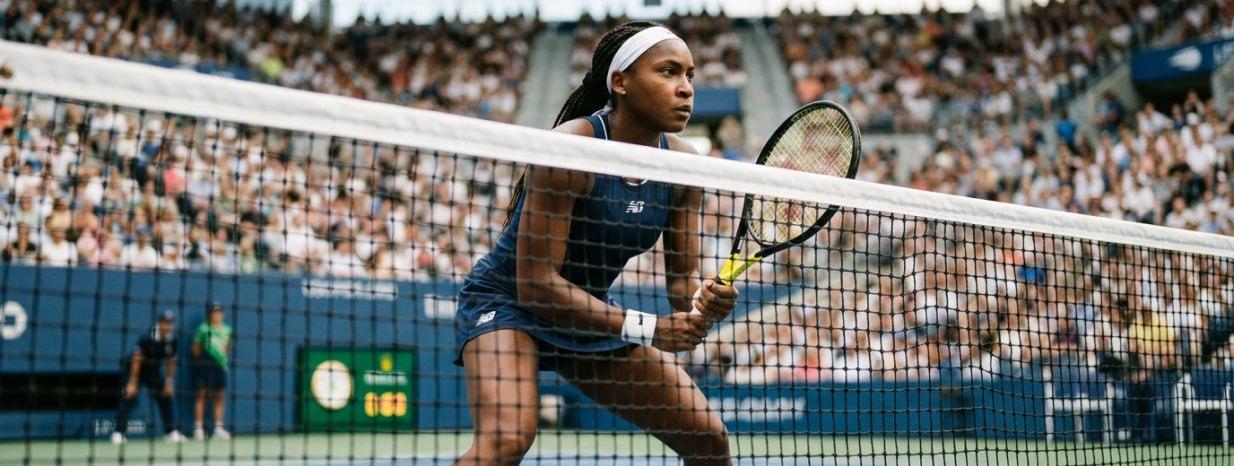
Three years in a row. That is how long it has been since a woman appeared in the Forbes top 50 highest-paid athletes list.
The floor to make that list in 2026 was $54.6 million. The highest-earning female athlete this year was Coco Gauff, at $35.5 million. Aryna Sabalenka, the world number one in women's tennis, earned $36.1 million by Forbes' measure. Neither came close.
And now, both of them are talking about a boycott.
What Sabalenka and Gauff actually said
At the Italian Open in May 2026, Sabalenka was direct: "I think at some point we will boycott it. I feel like that's going to be the only way to fight for our rights."
Gauff went further. She said she could "100% see" a boycott happening. She also said something that stopped me: "The 200 best tennis players are living paycheck to paycheck."
The 200 best tennis players in the world. Living paycheck to paycheck. That is not a fringe claim. That is the economic reality sitting just below the tier of athletes most people see on TV.
The revenue math that explains the frustration
Wimbledon distributed £64.2 million ($84.7 million) in prize money in 2026. That sounds significant until you understand it represents roughly 15% of the tournament's total revenue. Players asked for 16%. The answer was essentially no.
At Roland Garros, the player share of revenue declined from 15.5% in 2024 to a projected 14.9% in 2026. Revenue grows. Player share shrinks.
For comparison: NFL players receive approximately 48% of league revenue under their collective bargaining agreement. NBA players operate near a 50-50 split. The WNBA, in a landmark 2026 CBA, moved its player share to 20%. Tennis remains in the low teens.
The tournaments generate record money. The players who make those tournaments worth watching receive a fraction of it, and that fraction is going down.
The endorsement gap is structural, not individual
Gauff earned $28 million of her $35.5 million from endorsements. That is the playbook for elite female athletes: when your sport does not pay you fairly, build a commercial identity that compensates. She launched Coco Gauff Enterprises in 2025. She is doing what any rational person would do given the incentives.
But here is the problem with that playbook. It works for the athlete who can command a global endorsement portfolio. It does not work for the 200 players living paycheck to paycheck. The athletes without the profile, without the agent relationships, without the platform to monetize what they have built.
That is not a Coco Gauff problem. That is a structural problem.
The Forbes list is not the point
The Forbes top 50 is a useful snapshot, but it is not the actual issue. The actual issue is what happens to female athletes who are not Gauff or Sabalenka. Who compete at the professional level. Who train full time. Who build real audiences and generate real engagement value.
Those athletes have almost no mechanism to monetize what they produce directly. Their income depends almost entirely on tournament prize money, which represents a declining share of revenues they help create, or on securing corporate sponsorships that are structurally harder to obtain outside a narrow profile of celebrity athletes.
The gap Gauff and Sabalenka are protesting at the Grand Slam level is the same gap, at a different scale, that plays out across women's sports at every tier below them.
What changes this
The boycott threat is a blunt instrument. It works because the athletes are the product. Wimbledon without Gauff and Sabalenka is a lesser tournament. The leverage is real.
But boycotts are reactive. They address a specific negotiation, not the underlying structural problem that makes the negotiation necessary in the first place.
The structural problem is that professional athletes, at every level, have one primary income source: a contract or prize money from an institution that has every incentive to minimize their share. Everything else, sponsorships, appearances, content, is a secondary layer that requires external gatekeepers and favors athletes who are already visible.
What changes this is a direct connection between athletes and the people who follow them. Not dependent on tournament politics. Not filtered through endorsement agencies. A mechanism where the audience an athlete builds translates into income that belongs to them.
Gauff already understands this, which is why she built Coco Gauff Enterprises. The question is what that looks like for the 199 players below her on the paycheck-to-paycheck list.
That is the gap Thravos is built to address. Athletes at every level, across every sport, connecting directly with their fans to build income streams that do not depend on what any governing body decides their share should be. You can see how it works at thravos.io/athletes. The platform is live at app.thravos.io.
The conversation Gauff and Sabalenka have started is bigger than prize money. It is a conversation about who gets to participate in the economics of the audiences athletes spend their careers building. That conversation has no satisfying answer inside the current structure. The answer is a different structure entirely.
Join the Thravos movement
Join the Thravos revolution! We're building a vibrant community where everyone is welcome. Bring your friends, family, and even your neighbors! Together, we can create a healthier and happier future.
Get started today! Athletes can apply at Thravos Athletes, and fans can sign up on the Thravos app to start following athletes and joining challenges.
Follow us on social media: Stay connected with the latest news and updates on Twitter, Discord, and Telegram.
Disclaimer: This post may include forward-looking statements based on current expectations, plans, or projections. Actual results may differ due to various factors beyond our control. Readers are encouraged to conduct their own research and use independent judgment when interpreting the information provided. All content is for informational purposes only and should not be considered professional advice.