The highest-earning athletes in 2026 make as much or more off the field than on it. This is not a list of exceptions.
very year, the Forbes highest-paid athletes list arrives with a ranking and a headline number. The more useful part is the split underneath it: how much of that total came from playing, and how much came from everything else.
Look at the top of the 2026 list and a pattern shows up. For a growing share of the highest earners, the sport is no longer the larger half of the paycheck.
Ohtani: $2.6 million on the field, $125 million off it
Shohei Ohtani is the most extreme case. Forbes put his 2026 on-field earnings at $2.6 million against $125 million off the field, because most of his $700 million Dodgers contract is deferred until 2034. That deferral is why the on-field number looks so small, and it should be read with that context.
The off-field number needs no caveat. One estimate puts his endorsements at roughly 20 times those of Aaron Judge, the next-highest endorser in MLB, across more than 20 sponsors including Hugo Boss, New Balance, Porsche Japan and Seiko.
LeBron James: $85 million off the court
LeBron's Forbes total for 2026 is $137.8 million, of which $85 million came off the court. That works out to roughly $53 million from playing. Over two decades he has built SpringHill, Fenway Sports Group equity and a lifetime Nike deal, and the business layer now outearns the sport.
Messi, Curry and Durant: the even split
Lionel Messi's $140 million is split 50/50 between on-field and off-field income. Forbes describes Stephen Curry and Kevin Durant as having close to even splits too.
Three of the most recognizable athletes alive earn about half of their income from something other than playing. At this level, the second income layer is not a bonus. It is half the business.
Ronaldo: the exception that proves the point
Cristiano Ronaldo is the counterexample. Forbes has him at $235 million on the field and $65 million off it, because his Al Nassr contract is so large.
Even so, $65 million off the field is more than most athletes will earn from playing in their entire careers. And his on-field income depends entirely on a contract that ends. The off-field layer is the part that stays.
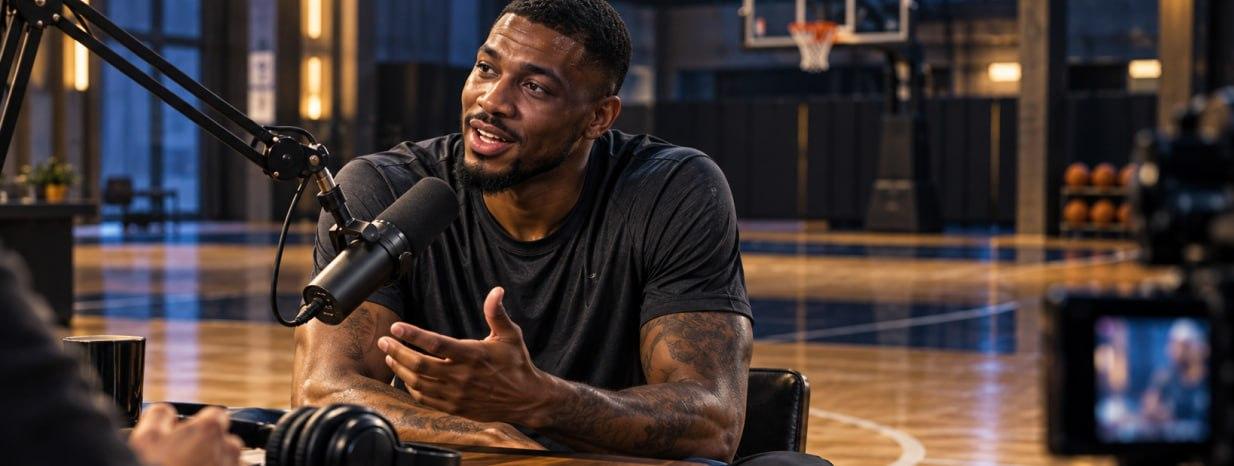
Travis Kelce: the podcast that outearns the contract
Kelce is the clearest example of a new category. His guaranteed NFL salary for 2026 is $12 million. His reported share of the New Heights deal is about $50 million over three years, or roughly $16 to $17 million a year, from a reported $100 million agreement. Forbes ranked the show seventh on its 2026 highest-paid podcasters list with an estimated $35 million.
Those figures are third-party estimates, and Kelce does not publish his finances. But on the reported numbers, a podcast he started with his brother now pays more per year than his football contract guarantees.
Draymond Green, Angel Reese and Serena Williams: the same shift, without published splits
Not every athlete on this kind of list has a public on-field versus off-field breakdown. Three are worth including anyway, with the caveat that the figures are not disclosed.
Draymond Green earns $25.9 million from the Warriors in 2025-26 and has built a podcast and YouTube show alongside paid appearances on Inside the NBA. His agent calls media "a big part of his future." No media income figure has been reported.
Angel Reese has extended her Reebok deal with a signature shoe due in 2026, runs a podcast, and has said her WNBA pay "pays one of my bills."
Serena Williams built Serena Ventures, which raised a $111 million first fund, with angel investments in about 60 brands, six exits and 13 unicorns. She moved from earning on the court to owning a piece of what comes next.
What the list is actually showing
The easy reading is that these are superstars with superstar deals. That is true, and it misses the structure underneath.
The 2026 sports business is organized around the idea that athletes are becoming media companies. The creator economy is projected to top $300 billion in 2026. PwC expects athlete-owned IP to become "a critical layer of the sports media economy", and notes that shows hosted by Travis and Jason Kelce, Draymond Green and Angel Reese reach audiences in the millions and attract seven-figure sponsorships.
A June 2026 Loeb & Loeb analysis in Sports Business Journal describes the shift directly: athletes act as media brands, distributors and IP owners, and these direct-to-fan businesses can produce value that outlasts a playing career.
The traditional model had athletes perform while leagues, teams, broadcasters and sponsors controlled the media rights and the monetization. The athletes on this list are the ones who stopped accepting that arrangement.
The question for everyone not on the list
Here is the part the lists leave out. Every athlete above started with a large audience, an agent network and a platform that gave them leverage. Kelce had a Super Bowl résumé. LeBron had a decade of global visibility before SpringHill. Ohtani's endorsements follow a story that covers two countries.
The roughly 380,000 athletes represented by sports agencies are not in the Forbes top 50, and about 70% of their endorsement deals go through an agency intermediary. They have audiences, sometimes real ones, and no direct way to turn those audiences into income they control.
That is the problem Thravos is built around. The principle behind every athlete on this list is the same: own the relationship with the people who follow you, and build it before you need it. At the top of the sport, that takes a podcast deal and a production team. For everyone else, it should not. You can see how athletes at every level are doing it at thravos.io/athletes, and the platform is live at app.thravos.io.
This is not a list of exceptions. It is a preview of how athlete earnings are being restructured, from the top down. The only open question is how long it takes to reach everyone else.
Join the Thravos movement
Join the Thravos revolution! We're building a vibrant community where everyone is welcome. Bring your friends, family, and even your neighbors! Together, we can create a healthier and happier future.
Get started today! Athletes can apply at Thravos Athletes, and fans can sign up on the Thravos app to start following athletes and joining challenges.
Follow us on social media: Stay connected with the latest news and updates on Twitter, Discord, and Telegram.
Disclaimer: This post may include forward-looking statements based on current expectations, plans, or projections. Actual results may differ due to various factors beyond our control. Readers are encouraged to conduct their own research and use independent judgment when interpreting the information provided. All content is for informational purposes only and should not be considered professional advice.